scientific activity
19
Oct
2026
06
Nov
2026
Earth System Physics
2026 ACCLIMATISE Huddle | (smr 4330)
Physical
Back
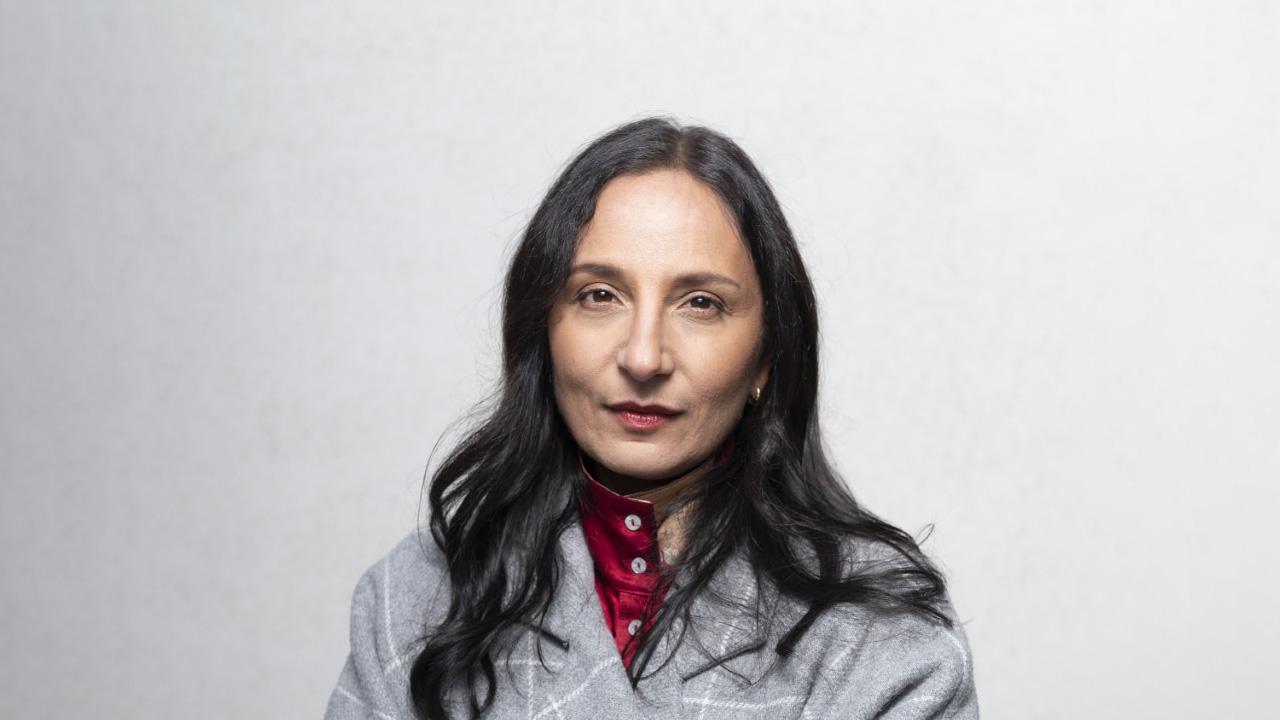
Where does science end and poetry begin? The event “The Birth of a Scientist and a Poet” taking place on Sunday 10 May at 17.30 at the LeTS Museum in downtown Trieste will explore this question. Starting from a reading of poems drawn from two of her collections, theoretical ecologist, poet, and ICTP former postdoctoral fellow Madhur Anand will explore how scientific research and poetic writing can stem from the same need to understand the world from different yet complementary perspectives.
The event is co-organised by ICTP and the International School of Advanced Studies (SISSA) as part of the science and literature festival Scienza e Virgola and of the celebrations of Abdus Salam’s centennial. It will be introduced by ICTP Director Atish Dabholkar and moderated by Sergia Adamo, professor of comparative literature and literary theory at the University of Trieste.
Anand wrote her first poem in 1996 in the final year of writing up her PhD thesis in theoretical ecology. Shortly after, she found herself as a visiting postdoctoral fellow at ICTP. Over the years, Anand would return several times to ICTP as a visiting scientist and slowly start to find her way also as a poet. She now uses several concepts and methods from theoretical physics in her work both as a scientist and a poet and credits ICTP and Salam's vision of it as an interdisciplinary, international institute for her career as scientist and poet. Returning now, 30 years later, to ICTP to work on a new collection of poems that examines the visits of Rilke and Boltzmann to Duino, she also helps us celebrate the centennial of Abdus Salam.
At the event, Anand will read from her two collections of poems, "A New Index for Predicting Catastrophes" and "Parasitic Oscillations" (published by McClelland & Stewart/Penguin Random House Canada) which examine the intersections of poetry and science as well as her own ancestral origins in pre-Partition Punjab, the region where Salam was born.