
seminars
19
Oct
2026
Condensed Matter and Statistical Physics
CMSP Seminar: Strongly correlated chiral fermions on a lattice: Luttin...
Physical
Back
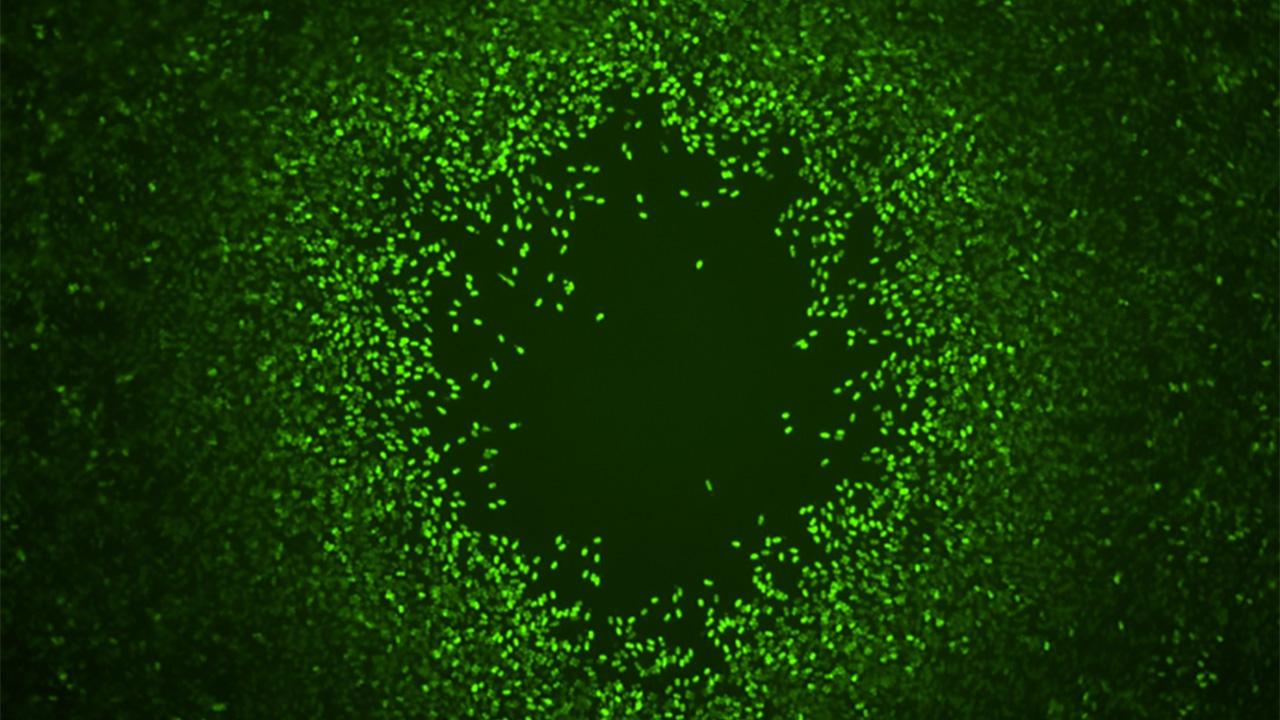
All organisms need to find ways to survive in changing environments, which at times can become hostile: extreme temperatures, food scarcity, low oxygen and high radiation can make life very difficult. While hibernation is prevalent among animals, several types of bacteria rely on their capacity to turn into spores—sturdy structures that survive extremely unfavorable conditions. Spores are among the most abundant cell types on Earth and they have existed for billions of years. Despite their protective role, however, spores come at an energetic cost for cells. Scientists are curious to understand how the economics of spore production has played a role in their evolution.
To answer this question, William Shoemaker, a postdoctoral researcher in ICTP’s Quantitative Life Sciences section, teamed up with researchers at Indiana University, in the United States, to study the energetics of spore formation in bacilli—a group of bacteria that scientists use as model organisms to understand how life survives in extreme environments. Their study shows that energetic factors can explain the behaviour of bacterial populations in unfavorable environments, and provides a possible explanation of why spore formation has survived for billions of years in certain strains and was lost in others. Their results reveal key forces at play in the evolution of this essential survival mechanism. The findings were recently published in the Proceedings of the National Academy of Sciences (PNAS).
“We started by calculating the energetic cost of forming a spore, and comparing it with that of other cellular functions,” Shoemaker explains. “We found that the complete life cycle of a spore amounts to about 10% of the total cell budget per life cycle, and it is among the most expensive cellular processes and traits, including alternative survival strategies such as various forms of motility and the formation of biofilms,” he adds. “We then used these estimates to study how bacterial populations behave in an environment where resources are becoming increasingly scarce,” Shoemaker continues, adding, “Our model shows that in certain conditions the trade-off between resource availability and the energy cost of spore formation can limit the fraction of cells that turn into spores and the extent to which sporulation is effective as a survival mechanism.”
What does this tell us about how sporulation evolved? Scientists know that it takes a very short time for bacilli to lose their ability to form spores in a lab, and yet this trait has survived for billions of years in nature. “It only takes a few hundred generations for bacteria to lose this trait where their living conditions are artificially favourable,” Shoemaker explains. For the first time, the team used energetic arguments to resolve this apparent contradiction.
Sporulation relies on many genes that must be replicated every time the cell divides, increasing the energetic cost of maintaining this trait. Shoemaker and his collaborators were able to show that in favourable environments, natural selection rapidly eliminates the costly machinery required for spore formation. Understanding the economy of sporulation therefore helps explain not only why this survival strategy persists in nature, but also why it disappears when conditions become stable and favourable. By revealing how energy constraints shape evolutionary outcomes, the study highlights a fundamental principle of life: survival is not just about enduring hardship, but about balancing the costs and benefits of doing so over time.
Original article:
C. Karakoç, W.R. Shoemaker, & J.T. Lennon, Evolutionary bioenergetics of sporulation, Proc. Natl. Acad. Sci. U.S.A. 123 (6) e2524274123, https://doi.org/10.1073/pnas.2524274123 (2026).