
scientific activity
26
Oct
2026
29
Oct
2026
TWAS Science Policy Dialogue | (smr H728)
Physical
Back
Following decades of therapeutic breakthroughs, the next frontier in cancer treatment lies in prediction and precision: the challenge is to predict an individual patient’s risk of developing the disease, how it will evolve, which therapies will be most effective before treatment even begins and monitor response to predict when to stop, change or modify a particular treatment. Despite extensive efforts deployed in this direction, progress in clinical practice has been slower than expected and confined to the most privileged parts of the world.
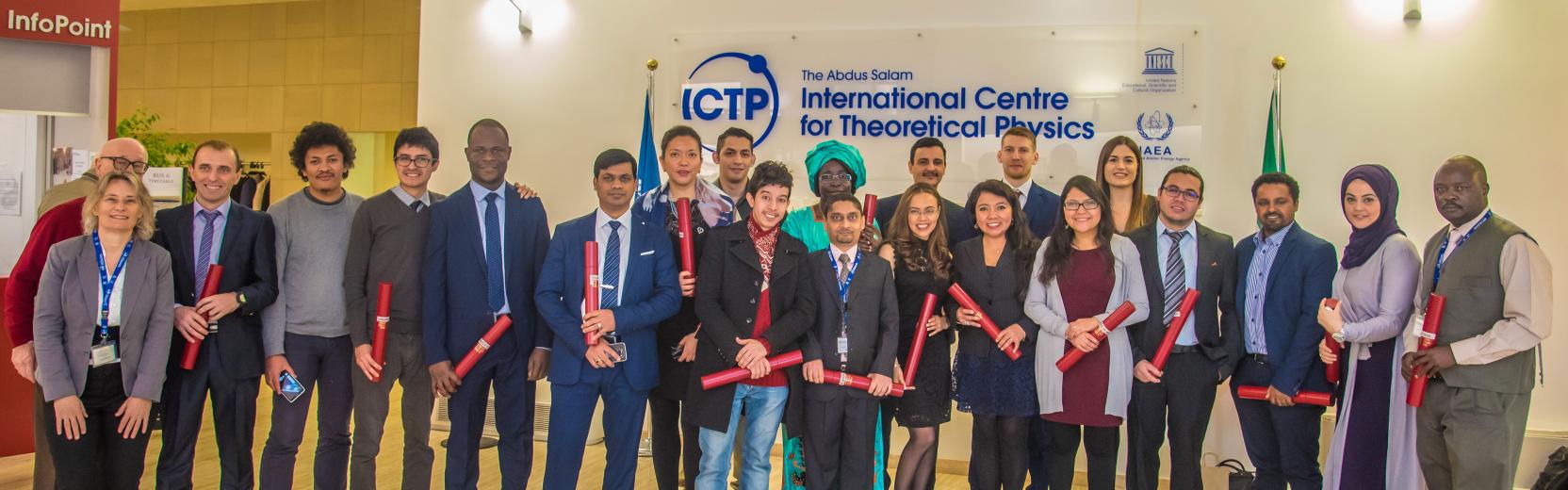
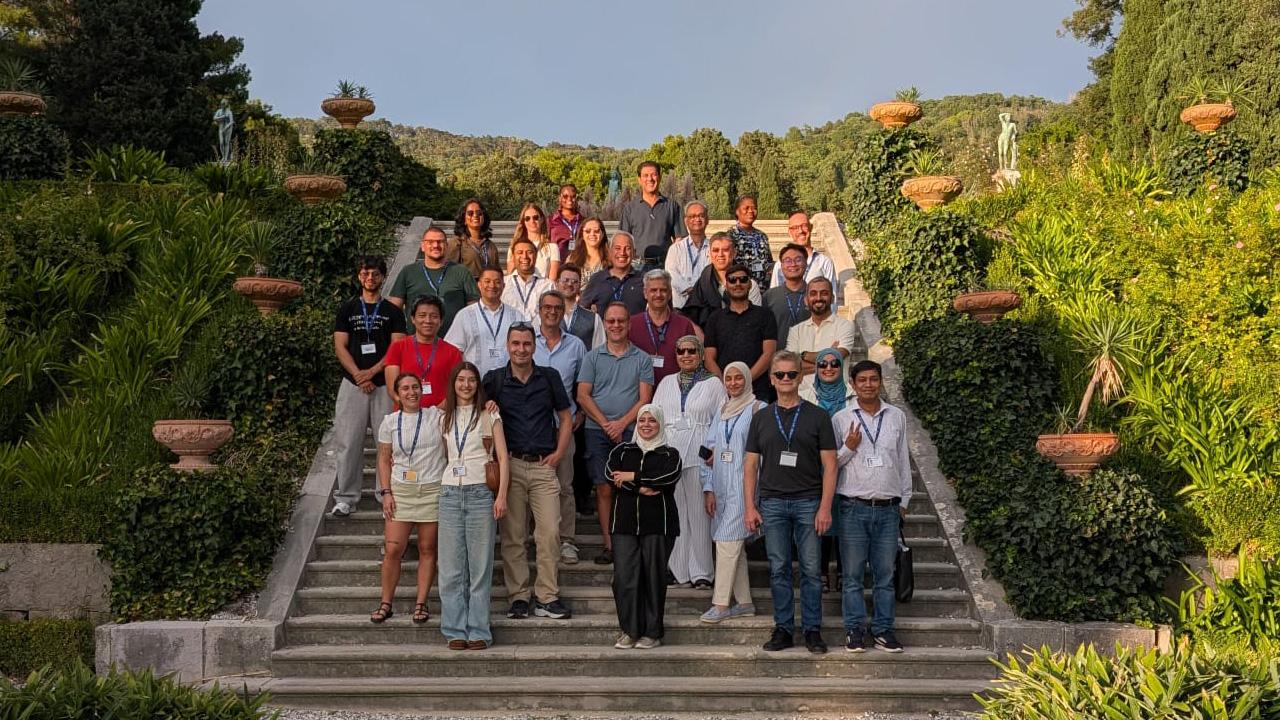
A group of medical physicists backed by a range of national, regional and international associations is proposing to upscale collaboration in the field of predictive oncology by adopting a more systematic, physics-based strategy. They gathered in Trieste from 14 to 18 September 2026 at an ICTP Workshop on Physical Sciences in Medicine to start laying the foundations of an international consortium of medical physics for predictive oncology, inspired by large scientific collaborations in particle physics and astronomy. The workshop was supported by some of the world's top medical physics organisations, including the American Association of Physicists in Medicine (AAPM), the Italian Association of Medical Physics (AIFM), the European Society for Radiotherapy and Oncology (ESTRO), and the International Organization for Medical Physics (IOMP).
“Cancer is a global problem; it knows no borders. Building predictive oncology requires participation of scientists around the world, shared standards and methods, and a coordinated approach. Only through a global collaboration will we ensure that our efforts in cancer research have a greater and more inclusive impact,” said Robert Jeraj, one of the organisers of the workshop, who chairs the IOMP Science Committee and the AAPM International Council, and is a professor at the University of Wisconsin–Madison and at the University of Ljubljana.
The event gathered 30 participants from 16 countries across 4 continents to define the priorities and the key objectives of the project, whose final goal will be to build a patient-centred, physics-enabled predictive oncology platform at the global scale. Discussions revolved around four main working areas: the development of accurate biomarkers that will allow to characterise and predict the evolution of the tumour; assessing outcome predictions for each patient; and developing physics-based models both for the evolution of the cancer and for the therapy.
The lack of strategic coordination in current efforts toward predictive oncology has contributed to the global gap in cancer treatment. “Globally, the cancer burden stands at approximately 20 million new cases and nearly 10 million deaths annually, with over 70% of fatalities occurring in low- and middle-income countries (LMICs). The five-year overall survival rates further reflect this stark gap, reaching 65–75% in high-income countries compared to only 20–40% in LMICs,” said Marco Esposito, ICTP Research Scientist and the coordinator of ICTP’s Master in Medical Physics programme. “A landmark modelling study by The Lancet Oncology Commission demonstrates that scaling up access to quality treatment, imaging, and precision planning could avert 9.55 million cancer deaths over ten years, saving roughly 1 million lives each year. However, past efforts in personalised medicine and precision oncology have produced severe global disparities, leaving low- and middle-income countries largely excluded from their benefits. To address this gap, our project aims to build a scalable predictive oncology framework, combining physics-informed modelling with quantitative imaging biomarkers, specifically designed to democratise high-level care and ensure that these global inequalities between high-income and resource-constrained settings are not replicated,” he added.
The promoters of this global alliance have surveyed various types of collaborations across the physical and medical sciences, and have come up with an initial idea of what a successful international collaboration in predictive oncology should look like. “The consortium we want to build will revolve around a shared platform comprising standard methods and models that need to be established and coordinated by all stakeholders at the global level,” said Jan Seuntjens, who is Head of Medical Physics at Princess Margaret Cancer Centre and Professor at the University of Toronto, and the former chair of the AAPM science council.
The workshop has contributed to defining a funding proposal to support the project’s next steps, which a core team of promoters is already working on. The second edition of the workshop has already been scheduled for mid-September 2027 to advance the initiative, reflect on the progress made and plan ahead.