
seminars
29
Oct
2026
Mathematics
Seminar: Stark units for real quadratic fields and finite quantum dilo...
Physical
Back
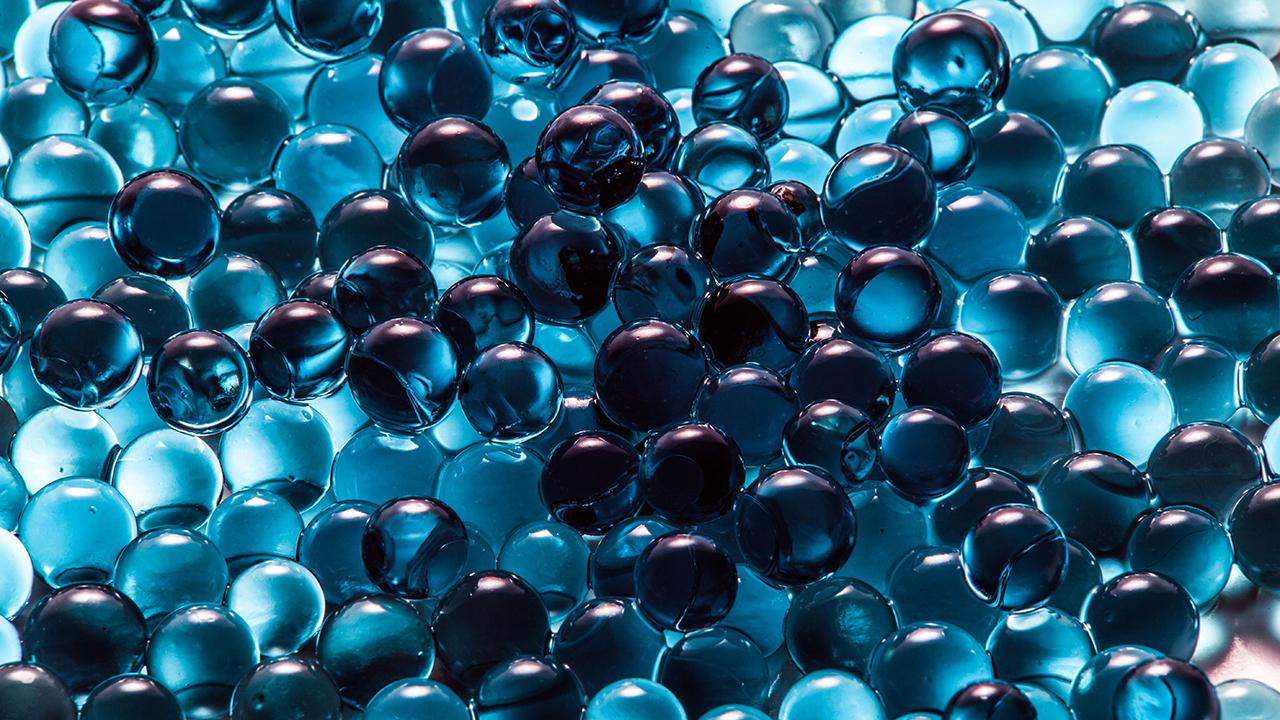
Physicists at ICTP and SISSA in Trieste have opened a new window into the dynamics of water molecules by applying advanced causality analysis to characterise their motion. Insights on how molecules move collectively in liquids are essential to understanding how fluids flow, react and freeze.
When seeing two people move in a crowded room, one might wonder: did one of them step aside to let the other pass, or did the second person’s push make the first one step away? Watching the scene from above, there is no way to tell, but a group of researchers led by Ali Hassanali, ICTP Senior Research Scientist, and Alessandro Laio, professor at SISSA, have developed a method to tell the difference, and applied it to water molecules. Their results, which have been published in the Proceedings of the National Academy of Sciences (PNAS), shed new light on water’s complex behaviour.
Despite the apparent simplicity of water molecules, there is still much that scientists do not understand about how they behave collectively. Water can remain liquid well below 0°C, but this supercooled state is extremely hard to investigate experimentally and accurate simulations are challenging. Bypassing an inherent limitation of standard methods used by scientists to study the motion of molecules, the team applied advanced causal analysis to look in detail at how water molecules move, both at room temperature and in supercooled water, and thus highlight new distinctive features of these two phases.
Theoretical tools available until now to interpret numerical and experimental data have relied on correlations, which can tell to what extent two variables vary together, but do not say anything on which movement leads and which one follows. “By applying a predictive criterion that looks at how the future evolution of one variable is improved by information on the past of another, our method measures which of the two variables drives the variations and thus infers the causal relations between them,” explains Vittorio Del Tatto, co-author of the study, who carried out the work as a PhD student at SISSA and is now a postdoctoral fellow at the University of Valencia.
The researchers simulated water in two different cases: at ambient conditions and in a low-temperature and high-pressure supercooled state. They tracked the position and the orientation of water molecules and looked at the causal relations between molecular displacements (translations) and their rotations over time. Their findings are very different in the two phases. While at room temperature rotations and translations are only weakly coupled, in supercooled water translations are found to cause rotations: affecting the ability of molecules to diffuse is expected to have a strong effect on their capacity to reorient, but not vice versa. These results reflect a dramatic slow-down of the dynamics of water molecules in low-temperature and high-pressure supercooled water and show that the direction of causal influence could be used as a diagnostic probe for the onset of this complex dynamics in supercooled liquids.
“We know from previous studies that supercooled liquids are characterised by regions where molecules move fast and others where they are so closely packed that their motion is hindered by their neighbours, a phenomenon called caging effect,” says Léon Huet, ICTP postdoctoral fellow and the first author of the study. “Our analysis reveals the direction of influence behind this picture. Imagine a molecule stuck in the midst of its neighbours: it can only reorient once its surroundings have rearranged. We show that in the supercooled phase translational motions of water molecules are needed to trigger rotations, while the opposite is not true.”
These results show that causality analysis can help scientists describe collective molecular dynamics to a new level of detail and unveil features of matter at the molecular scale that could not be probed until now. If applied to other states of matter, causal relationships could ultimately become a distinctive trademark of different phases, a way of characterising them not only by how molecules are arranged, but also by how they trigger each other’s movement.
Original article on PNAS:
L. Huet, V. Del Tatto, D. Banerjee, A. Laio, & A.A. Hassanali, Causality in liquid water as a hallmark of emergent glassy dynamics, Proc. Natl. Acad. Sci. U.S.A. 123 (43) e2616852123, https://doi.org/10.1073/pnas.2616852123 (2026).